Writing Vivid Descriptions: Painting Pictures With Words
Published
A reader who has never visited your story's world should still be able to feel it: the weight of the air, the sounds behind the dialogue, the mood that settles over a scene before anyone says a word. That feeling comes from description, and the difference between vivid description and a pile of adjectives is a matter of technique. This guide covers how to build a strong sense of place and atmosphere, and how to do it without slowing your story down.
Start With Show, Don't Tell
The most famous principle in descriptive writing is "show, don't tell." Wikipedia defines it as a narrative technique that lets readers experience a story through action, dialogue, subtext, thoughts, senses, and feelings, rather than through the author's direct explanation or summary [1].
The idea is often credited to Anton Chekhov, who is said to have wanted a glint of light on broken glass rather than a statement that the moon is shining. The same source notes that his actual letter describes a moonlit scene through small details, such as a glass shard glittering on a mill dam and a dog's shadow rolling past [1].
That example holds the whole lesson. "The moon was bright" tells the reader a fact. A glittering shard of glass lets them see the night for themselves. Chuck Palahniuk, cited in the same article, recommends avoiding "thought verbs" like "realizes" or "believes" in favor of concrete sensory detail [1].
The rule has limits, and the article is candid about them. James Scott Bell argues it should not apply everywhere, since telling can move a story along quickly and constant showing can exhaust readers and blunt the key scenes. Showing also takes more words, so telling can cover more time efficiently [1]. The practical takeaway is to spend your showing on the moments that matter.
Ground Description in the Senses
Sensory detail is the raw material of vivid writing. MasterClass advises grounding descriptions in a character's senses, such as how a place feels, smells, sounds, or tastes. Rather than describing a tree in general terms, note what makes it distinct to that character [2].
You do not need all five senses in every scene. Literary Devices recommends choosing the senses that reinforce the scene's mood or theme. A horror scene, for example, can lean on sound and touch, such as creaking floors and cold drafts, rather than heavy visual description [3]. Sight is the default sense for most writers, so reaching for smell or sound often makes a scene feel fresher.
Build Place From Place, Time, and Perception
A sense of place has several layers. MasterClass breaks setting into place and time. Place covers both the geographic location and the immediate surroundings, such as busy New York versus a remote Pacific island, or a cramped room versus a vast forest. Time includes the hour, the season, and the historical period, and seasons can raise the stakes, as with a harsh winter or a scorching summer [2].
The same article stresses perception: reveal the setting through how characters experience it, since a filtered view often feels more vivid. It also advises letting the setting shape characters' moods and choices, because without that, characters and their world can feel static [2].
Literary Devices makes a related point about point of view: it controls what readers can see. First-person narration offers a narrow view, while third-person can survey the whole room. The source suggests linking the setting to characters' emotions and showing how characters react to their surroundings [3]. A tired soldier and a curious child walking the same street should describe it differently, and that difference is itself characterization.
Create Atmosphere on Purpose
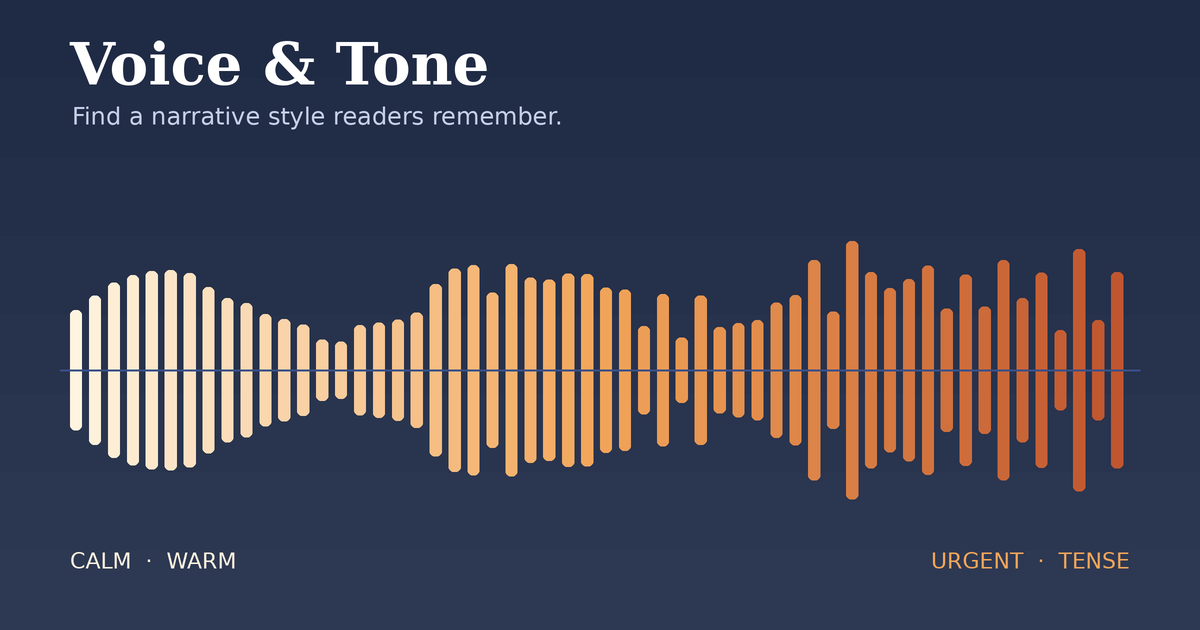
Atmosphere is the emotional weather of a scene, and weather itself is a classic tool for it. Writers Helping Writers explains that readers bring their own experience of weather into a story, so it can make a scene feel welcoming or threatening and can create tension or hint at what is coming [4].
Its most instructive example shows one scene twice. In the first version, a warm, bright late afternoon with children playing and a hot breeze makes a walk toward a loved one feel light and happy. In the second, the same walk at sunset, with heavy clouds, cold wind, and a shadowed alley, makes the character hesitate. The event is identical, but the weather changes how the scene feels [4].
The article also warns about common pitfalls [4]:
- Stock pairings like a sunny beach for happiness or a gloomy downpour at a funeral feel predictable.
- Direct mirroring, such as lightning in a battle or rain at a breakup, often reads as melodrama. Instead, show how the character reacts to the weather.
- Long weather openings can slow the introduction of your protagonist.
You can also pair weather and setting deliberately, either contrasting them (pleasant weather in an unpleasant place) or reinforcing them (a storm over a bleak location) to build the intended feeling [4].
Choose Details With Care
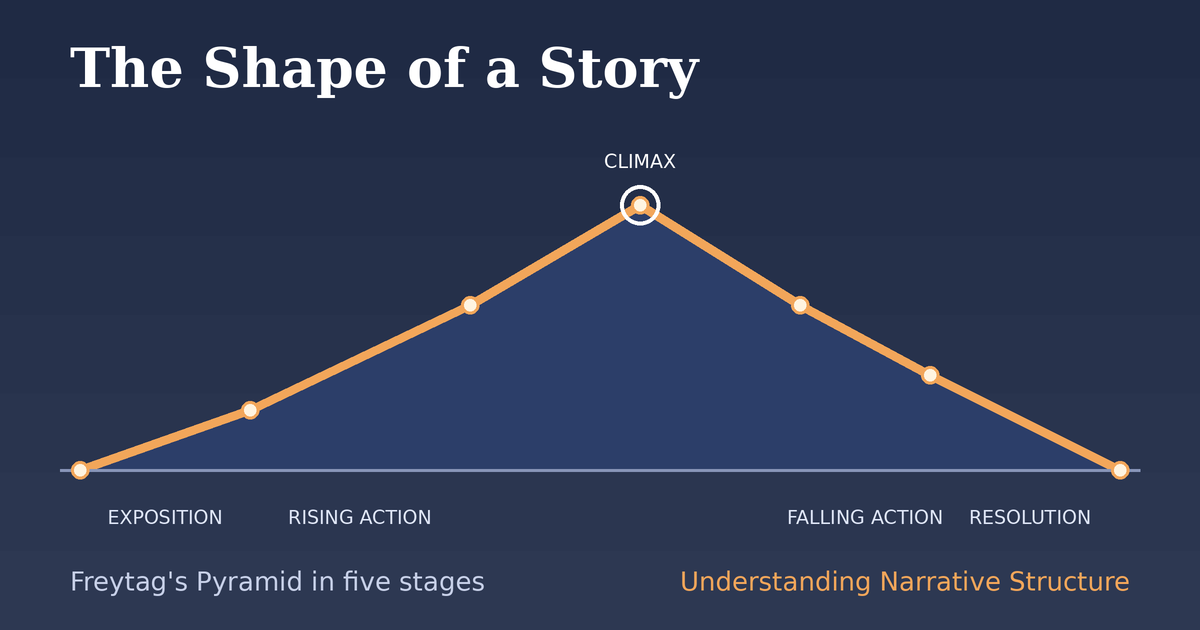
More description is not better description. Literary Devices advises keeping only details that serve a purpose and balancing vividness against clarity, since too much detail overwhelms readers and too little leaves them guessing [3]. The same source recommends timing details to the story's arc: establish the tone early, intensify details at the climax, and use calmer details in the resolution to create closure [3].
Overdoing it has a name: purple prose. Writers Helping Writers defines it as writing so ornate, self-indulgent, or overwrought that it draws attention to itself and gets in the way of the story. It drags the pacing, muddies meaning, and can make emotions feel melodramatic [5].
The fixes are practical [5]:
- Limit adjectives and adverbs. The article contrasts "a tall, brooding, mysterious man walked solemnly" with "a stranger drifted down the street." A stronger verb often replaces an adverb.
- Use one clear metaphor. Mixed or repeated comparisons confuse readers. Pick one image and commit.
- Show emotion through the body, such as a sinking stomach or halting speech, rather than labeling it in grand terms.
- Favor plain words and let the point-of-view character's voice guide word choice.
- Describe selectively. Mention the details that matter, like silk curtains stirring in the breeze, rather than cataloging every thread.
Its closing tip is simple: read passages aloud, and if you stumble or have to reread a sentence, revise it [5].
Practice: Two Exercises
MasterClass suggests two exercises for building the habit. One is to draw a map of your world, with landscape features and places that match its tone. The other is to visit an unfamiliar location and absorb it through your senses before writing about it [2]. A third idea of our own: write the same room twice, once as seen by someone arriving home after a long absence and once by someone about to leave forever, and notice which details each narrator picks.
A Quick Revision Checklist
Run each descriptive passage through these questions, drawn from the sources above:
- Am I showing the moment that matters, or telling it? [1]
- Which senses am I using, and do they fit the mood? [3]
- Whose eyes are these? The setting should be filtered through a character [2].
- Is the weather doing real work, or just mirroring a feeling? [4]
- Does every detail earn its place? [5]
- Does it read cleanly aloud?
The Takeaway
Vivid description is not about decoration. It is about choosing the right few details, such as a glint on broken glass, a cold wind in a shadowed alley, or a floorboard that creaks, and letting the reader's imagination do the rest. Use the senses, filter the world through your characters, and trim anything that does not serve the scene.
Sources
- Wikipedia, "Show, don't tell." https://en.wikipedia.org/wiki/Show,_don%27t_tell
- MasterClass, "How to Create a Vivid Setting for Your Story." https://www.masterclass.com/articles/how-to-create-a-vivid-setting-for-your-story
- Literary Devices, "Mastering Setting Detail: How to Paint Scenes in Writing." https://literarydevices.net/mastering-setting-detail-how-to-paint-scenes-in-writing/
- Writers Helping Writers, "Use Weather to Create Mood." https://writershelpingwriters.net/2025/09/use-weather-to-create-mood/
- Writers Helping Writers, "Writing 101: Avoiding Purple Prose." https://writershelpingwriters.net/2025/07/writing-101-avoiding-purple-prose/
The same-room-twice exercise, the tired-soldier and curious-child illustration, and the checklist wording are the author's own synthesis of the ideas in the sources above.